
In general, violence connotes an intense manifestation of strength, usually involving some severe physical effects as in the violence of a thunderstorm, earthquake, explosion, stampede, and so on. Clearly, it is a manifestation of nature’s balancing of powers.
What about violence between people–killing, fighting, beating, rampaging, warring? Are all such manifestations reflections of social conflict confusion in the literature. We may intentionally try to produce effects through either another’s self or his body. We may use threats of force or apply actual deprivations such as torture or a beating to coerce another’s will to do what we want. Or we may ignore the other’s will and simply use physical force on his body, such as dragging him struggling into a jail cell. Whether it is a case of coercion or of physical force depends on the intent of the user. Violence directed towards coercing another’s will comprises either a threat or deprivation, and is the application of coercive power.For example, twisting another’s arm to make him reveal a secret is coercion, as is beating up another to show what will happen again if he does not yield to your demands. If violence, however, has some purpose aside from another’s will, then it is physical power. Such is killing another to be rid of him, or a war of extermination between neighboring tribes.
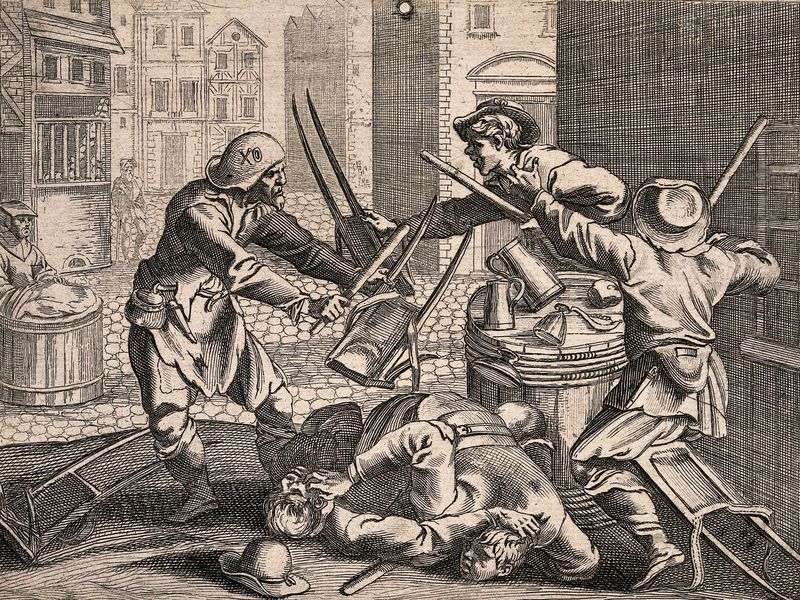
https://www.smithsonianmag.com/smart-news/medieval-graveyards-reveal-londons-violent-past-180964652/
Physical force is not social, in that it is not oriented towards another self. Insofar as violence is involved in physical force, then, violence is not social and does not manifest social conflict. Violence, of course, may be the result of emotions engendered by conflict and constitute reflex behavior, as in the lover’s slap or the family quarrel ending in wild shooting. Or violence can end social conflict, as when one impatient or unhappy with the balancing of social powers resolves the opposition through murder. Thus negotiations between political factions for national leadership may end in a coup d’état or assassination.
Social conflict is an engagement of selves. Violence directed only at objects or bodies is not social. Insofar as violence is a means towards coercing another, it is a manifestation of social conflict
As a phenomenon, therefore, human violence is fundamentally ambiguous; whether it constitutes a reflex behavior, physical force, or coercion, whether it manifests social or nonsocial conflict, can be determined only by reading the associated field of expressions, by assessing intentionality.

KEY TAKEAWAYS
- Conflict theory focuses on competition between groups within society over limited resources.
- Conflict theory views social and economic institutions as tools of struggle between groups or classes, used to maintain inequality and the dominance of the ruling class.
- Marxist conflict theory sees society as divided along lines of economic class between the proletarian working class and the bourgeois ruling class.
- Later versions of conflict theory look at other dimensions of conflict among capitalist factions and between various social, religious, and other types of groups.
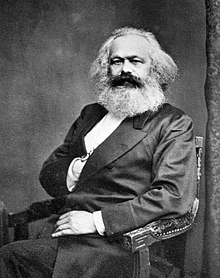
Karl Marx
“A house may be large or small; as long as the neighboring houses are likewise small, it satisfies all social requirement for a residence. But let there arise next to the little house a palace, and the little house shrinks to a hut.” Wage Labour and Capital (1847)

 Mountain explorer's group