How would you describe extreme poverty in the Philippines?
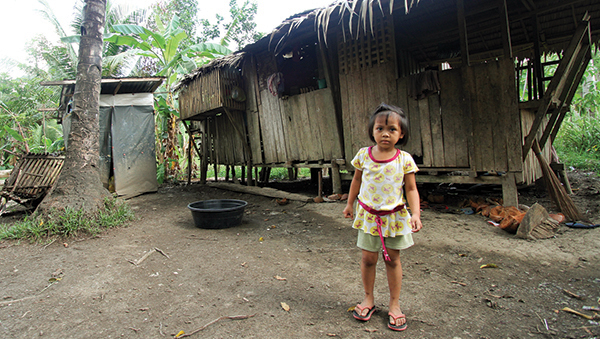
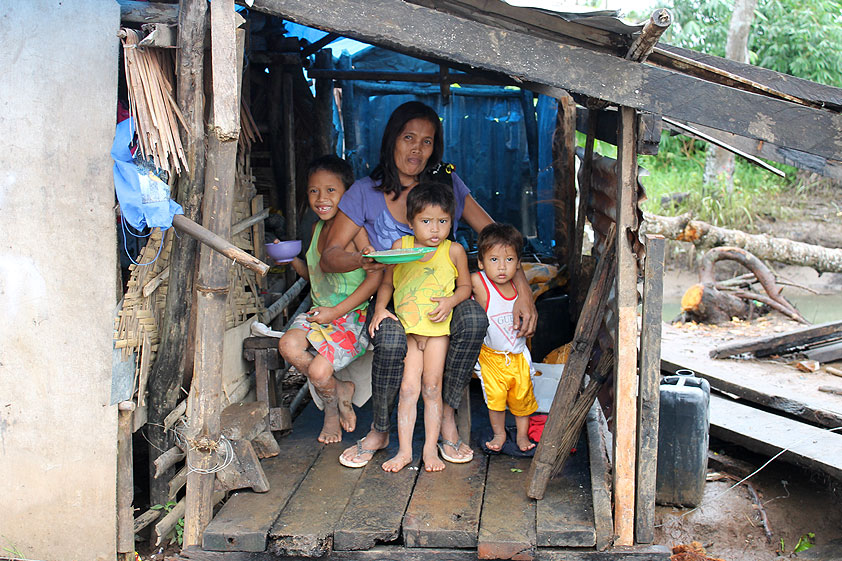
In 2012, extreme poverty in the Philippines was estimated at 19.2 percent of the population, or about 18.4 million people, based on the international poverty line of $1.25 per day. Most of the poor in the Philippines live in rural areas and work in the agriculture sector, mainly in farming and fishing. Urban poverty, however, has been increasing in recent years. Migrants without jobs or with low-paying jobs are unable to afford decent housing. As a result, Philippine cities have high proportions of informal settlers who are among the poorest of the poor.
Moreover, poverty is severe in parts of the country with high levels of conflict. The Philippines’ 10 poorest provinces are considered either conflict-affected or vulnerable to conflict.
The poor in the Philippines have families of six or more members, with greater numbers of younger and older dependents. In the majority of poor families, the head of household has only an elementary education or below. These families have few or no assets and minimal access to electricity, water sources and toilet facilities. They also have limited access to health and education services.
Among Philippine citizens, the poor are most vulnerable to financial and price shocks and natural disasters. Often their efforts to cope with these shocks and make up for lost livelihoods and income result in deeper levels of indebtedness.
HOW TO END POVERTY?
Build on your brand’s core values through CSR
Corporate Social Responsibility is a perfect avenue to display your brand’s core values and competencies. Get involved with sustainable development projects and social causes that align with your brand’s mission and vision & showcase your work to the world.
Everything your nonprofit needs in one place
Inpactor provides many other tools for your NGO aside from volunteer recruitment and fundraising. Create and list your projects, measure and report impact, manage social projects, and more – all in one place.
Volunteer opportunities for anyone, anywhere
Give back to the community and genuinely make a difference in people’s lives. Develop new skills or build on your existing experience or knowledge. Get to know like minded people and expand your network. Volunteer for meaningful causes & make a difference for the world and yourself.
REFERENCE
https://www.usaid.gov/frontiers/2014/publication/section-1-extreme-poverty-philippines

 Mountain explorer's group